Saturday, September 10, 2011

UK on board with US fusion project

There's a lot of potential here ... really hope we see it realized:
The UK has formally joined forces with a US laser lab in a bid to develop clean energy from nuclear fusion.

Unlike fission plants, the process uses lasers to compress atomic nuclei until they join, releasing energy.

The National Ignition Facility (Nif) in the US is drawing closer to producing a surplus of energy from the idea.

The UK company AWE and the Rutherford Appleton Laboratory have now joined with Nif to help make laser fusion a viable commercial energy source.

At a meeting this week sponsored by the Institute of Physics and held at London's Royal Society, a memorandum of understanding was announced between the three facilities.

The meeting attracted scientists and industry members in an effort to promote wider UK involvement with the technology that would be required to make laser fusion energy plants possible.

"This is an absolutely classic example of the connections between really high-grade theoretical scientific research, business and commercial opportunities, and of course a fundamental human need: tackling pressures that we're all familiar with on our energy supply," said David Willetts, the UK's science minister.
 

Friday, September 9, 2011

Rugby World Cup

Don't even bother trying to get New Zealand's attention for the next couple weeks.

Follow the action at the New Zealand Herald:

Thursday, September 8, 2011

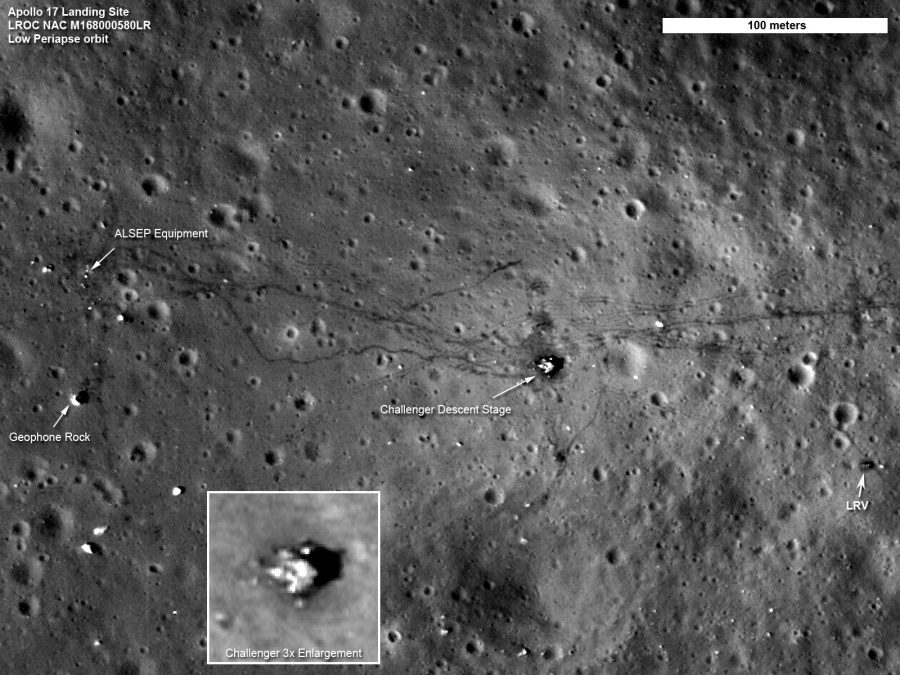
Walking On The Moon

Not just a great song from The Police, now the Lunar Reconnaisance Orbiter has provided the best pictures ever of the paths taken by astronauts on the moon:


Wednesday, September 7, 2011

Good News, Bad News

Okay, global warming is bad, I get that, but ..... it's a million new King Crab, that isn't entirely bad news to me.
King crabs have been found on the edge of Antarctica, probably as a result of warming in the region, scientists say.

Writing in the journal Proceedings B, scientists report a large, reproductive population of crabs in the Palmer Deep, a basin cut in the continental shelf.

They suggest the crabs were washed in during an upsurge of warmer water.
The crabs are voracious crushers of sea floor animals and will probably change the ecosystem profoundly if and when they spread further, researchers warn.

Related species have been found around islands off the Antarctic Peninsula and on the outer edge of the continental shelf.

But here the crabs (Neolithodes yaldwyni) are living and reproducing in abundance right on the edge of the continent itself.

Too True

Working life ...


Tuesday, September 6, 2011

Tuesday Night Football

The biggest international football (soccer) tournament is the World Cup. Midway between World Cups is the 2nd biggest international tournament, Euro.

Euro 2012 takes place next year in host nations Poland and Ukraine. Qualifying is taking place now in the early rounds of Europe's soccer championship.

At the Leidseplein sports bar where I go to see "any game that's on" (NFL late on Sunday) there were 5-7 games on at once between European national teams. I was there to see England vs. Wales, but the Netherlands were finishing up against Finland so the whole downstairs bar was watching that game. Upstairs were a big crowd watching Denmark v. Norway (happy loud drunken Viking fans), Germany v. Poland, France v. Romania, Italy v. Slovenia, Scotland v. Lithuania, and Austria v. Turkey.

Unlimited ribs w/fries or baked potato, 10 euros ... not the best ribs ever but really decent (there is a full rack stacked there).


Holland Hacked

Attackers who hacked into a Dutch Web security firm have issued hundreds of fraudulent security certificates for intelligence agency Web sites, including the C.I.A., as well as for Internet giants like Google, Microsoft and Twitter, the Dutch government said on Monday.

Experts say they suspect the hacker — or hackers — operated with the cooperation of the Iranian government, perhaps in attempts to spy on dissidents.

The latest versions of browsers including Microsoft’s Internet Explorer, Google’s Chrome and Mozilla’s Firefox are now rejecting certificates issued by the firm that was hacked, DigiNotar.

But in a statement on Monday, the Dutch Justice Ministry published a list of the fraudulent certificates that greatly expands the scope of the July hacking attack that DigiNotar acknowledged only last week. The list also includes certificates that were sent to sites operated by Yahoo, Facebook, Microsoft, Skype, AOL, the Tor Project, WordPress, and by intelligence agencies like Israel’s Mossad and Britain’s MI6.
N.Y. Times

Blog Archive